
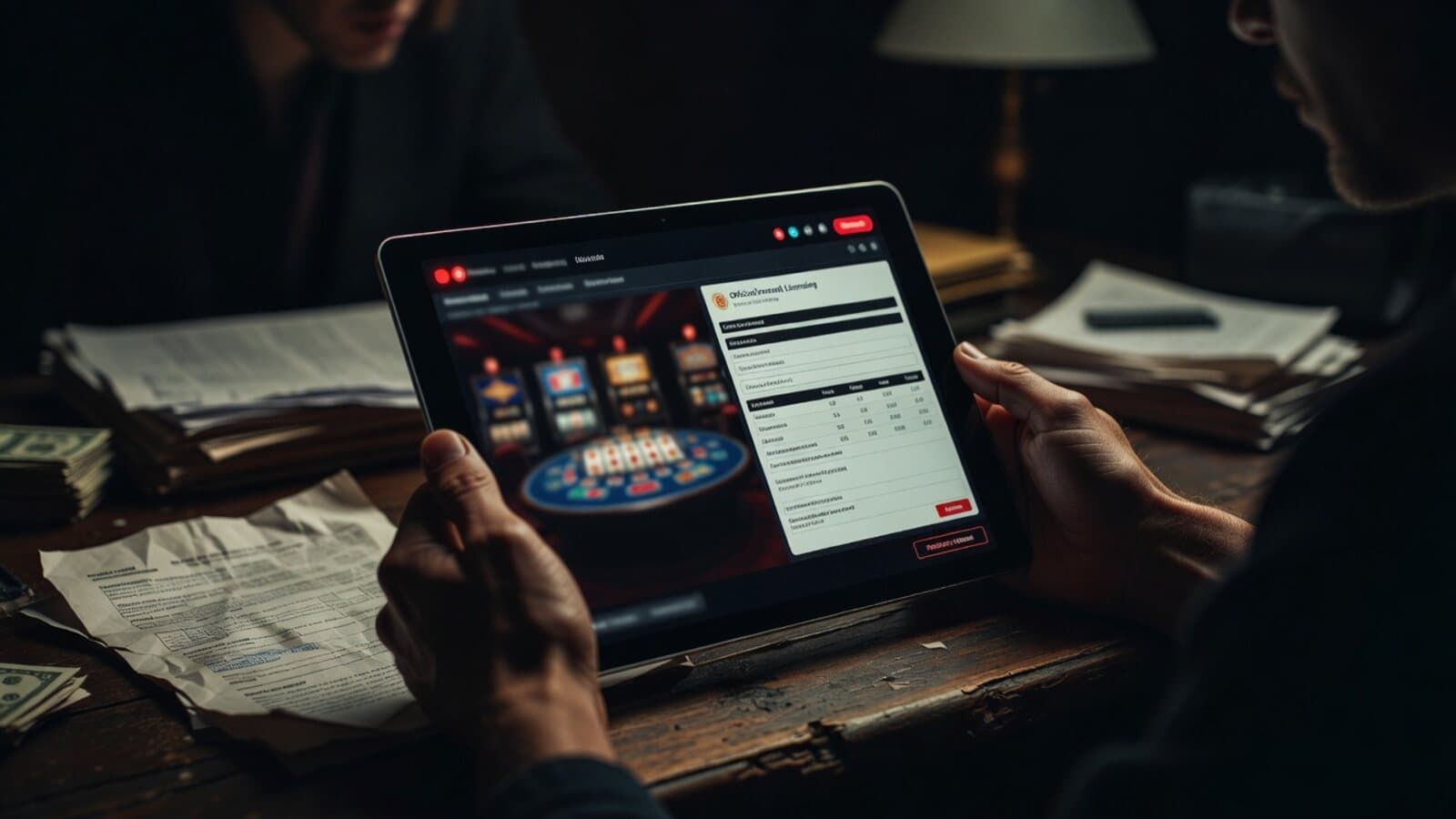
Before you hand over your card details or upload your ID, there is one question worth answering: is this casino licensed to take bets from someone where you live? It takes only a few minutes to find out, and it is the single most useful check a new player can make.
Why the licence matters
A gambling licence is not a badge of quality, but it is a set of enforceable promises. A licensed operator has to verify customers’ ages, protect their funds and data, offer tools such as deposit limits and self-exclusion, and answer to a regulator if it treats players unfairly. If a dispute arises, you have somewhere to take it.
Unlicensed sites carry none of those obligations. Regulators’ body IAGR lists the main risks as winnings that are never paid, little or no way to resolve a dispute and the misuse of personal and financial information. In Britain, some unlicensed casinos actively advertise to people who have self-excluded through GamStop, precisely because they are not bound by it.
Looks can be deceptive
The trouble is that a black-market casino can look exactly like a regulated one. It may carry games from well-known studios, sponsor a football club abroad or show glowing reviews. None of that tells you whether it is licensed in your country. In November 2026, the Dutch regulator ordered one established slot supplier to stop its games turning up on illegal sites after finding them on at least 28 of them, which is a reminder that a familiar game logo is no guarantee about the casino hosting it.
Step by step: checking a licence
- Find the licence details on the site. Scroll to the footer. A licensed operator will normally name the company that runs the site, the regulator and a licence or account number. Vague wording such as “fully licensed and regulated” with no regulator named is a red flag.
- Check the right regulator. What matters is a licence for your jurisdiction. In Great Britain that means the Gambling Commission. A licence issued elsewhere does not by itself allow a company to take bets from British players.
- Look the operator up yourself. Go directly to the regulator’s website rather than clicking a seal on the casino’s page, which can be faked. The Gambling Commission publishes public registers of licensed businesses that you can search by name or licence number.
- Match the details. Confirm that the company name, the licence number and the website address you are using all appear on the register entry, and that the licence is active rather than suspended or surrendered. Operators often run several brands under one licence, so the domain itself should be listed.
- Use a checker where available. The International Association of Gaming Regulators launched a free tool, CheckBeforeYouPlay.org, in November 2026. You enter a site’s address and it shows the licensing information it holds for participating jurisdictions.
Other warning signs
A missing or unverifiable licence is the big one, but a few other things should make you think twice:
- the site promotes itself as being outside self-exclusion schemes;
- it does not ask for proof of age or identity at any stage;
- bonus terms are missing, contradictory or only shown after you deposit;
- contact details amount to a web form, with no company address;
- you were sent there by an unsolicited social media message or ad.
What to do if you have already played somewhere unlicensed
Stop depositing, withdraw what you can and keep records of your transactions and any correspondence. Tell your bank if you are worried about how your card details may be used. If you were drawn in while self-excluded, it is worth reporting the advert to the platform that showed it to you. And if gambling is becoming hard to control, free confidential support is available.
The habit worth forming
Checking a licence should be as routine as checking a padlock in your browser. It costs nothing, takes a couple of minutes and puts you on the side of the protections the rules are meant to provide.
Frequently asked questions
Is a Malta or Curaçao licence enough for UK players?
Not on its own. To offer gambling to people in Great Britain, an operator needs a licence from the Gambling Commission. Licences from other regulators cover the markets those regulators oversee.
Can I trust the licence seal in a casino’s footer?
Use it as a starting point only. Seals and logos can be copied, so always confirm the details on the regulator’s own website.
What is CheckBeforeYouPlay.org?
It is a free tool launched by the International Association of Gaming Regulators in November 2026. You type in a website address and it shows the licensing information available for participating member jurisdictions.